
By Harrison Dobson March 19, 2026
Visa Fixed Acquirer Network Fees, or simply FANF fees, are a substantial part of the expenses of various businesses. These fees may appear as minor charges in a business statement; however, these charges may accumulate over time in a business with multiple locations.
Every storefront or environment may be treated differently in the context of Visa fees. As a result, a business cannot assume a single fee applies across an entire business. Knowing in advance the Visa Fixed Acquirer Network Fees at the start of the next quarter helps finance departments understand upcoming expenses.
By anticipating these network fees early in the quarter, leading up to the end of a quarter, businesses can make informed decisions and optimize their financial processes.
Table of Contents
Understanding What the FANF Fee Is
Visa Fixed Acquirer Network Fees, or simply FANF fees, are a substantial part of the expenses of various businesses. These fees may appear as minor charges in a business statement; however, these charges may accumulate over time in a business with multiple locations. Every storefront or environment may be treated differently in the context of Visa fees.
As a result, a business cannot assume a single fee applies across an entire business. Knowing in advance the Visa Fixed Acquirer Network Fees at the start of the next quarter helps finance departments understand upcoming expenses. By anticipating these network fees early in the quarter, leading up to the end of a quarter, businesses can make informed decisions and optimize their financial processes.
Why Multi-Location Businesses Pay More Attention to FANF
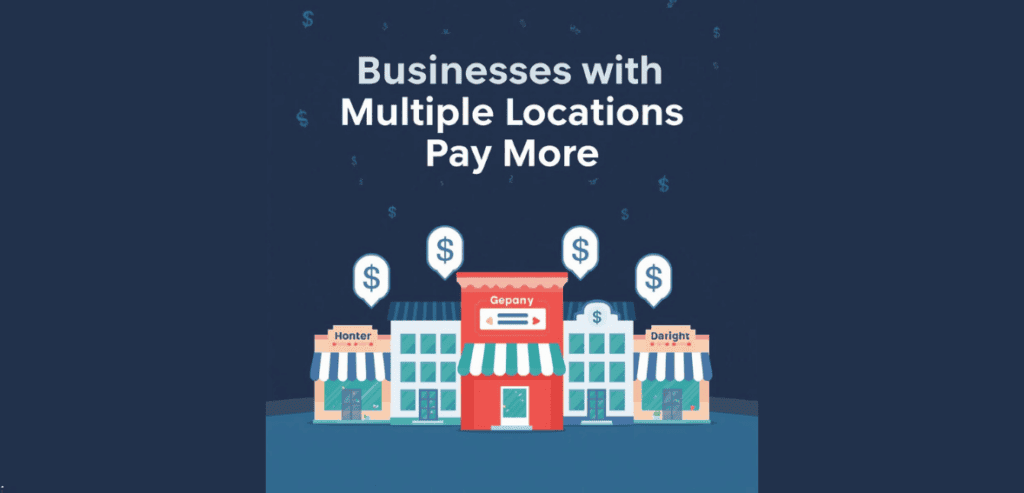
Businesses with multiple locations will have a much more complex FANF than a single-location merchant. Each location may be considered a new merchant outlet, and as such, the network fee may be applied multiple times within the organization. Online businesses or e-commerce environments may be considered a new merchant category within the network.
This means that as businesses expand into new markets, their FANF may actually increase. Franchise, chain, and restaurant businesses are typically affected the most. Being able to forecast FANF costs is important for a multi-location business so that it can understand the impact of its expansion strategies.
The Key Factors That Affect FANF Calculations
There are several factors that affect the calculation of Visa FANF fees. One of these factors is related to merchant category classification. This is particularly important since some businesses might have different FANF structures depending on their industry.
Another factor that is considered in determining Visa FANF fees is the active merchant locations under the business account. There is a possibility that businesses might incur separate charges for each outlet that they have registered. Finally, there is also the factor related to payment volume.
This is particularly important since businesses that have high card processing volumes might have different FANF structures. There is also e-commerce, and there might be additional classifications. These are some of the important factors that can be taken into account in order to create an estimate of how much businesses will incur in network fees.
Reviewing Merchant Statements for FANF Data
The most reliable source of information regarding FANF is the merchant processing statement. These statements tend to break down fees associated with networks separately from interchange fees and processor markup fees. Financial information should be analyzed from past months to understand how fees associated with FANF are represented on these statements.
This information is crucial in ensuring that there is no confusion over time. Analyzing past statements is crucial in ensuring that businesses are able to obtain information regarding how much is spent on fees associated with FANF on average per location or channel. This is where accurate forecasts are made.
Tracking Locations and Merchant Ids

A multi-location business may have various merchant identification numbers. Each of these may have a different location or environment. Since Visa FANF charges are related to the merchant identification concept in most cases, it is necessary to track these identifiers.
It is necessary to have a clear list of all active merchant accounts and locations. This helps the finance team understand the total number of locations under the fee structure. If new locations are added or existing locations are closed, it should be reflected in the list. Proper tracking of these identifiers ensures accurate forecasts of Visa FANF charges.
Estimating Quarterly Payment Volume
The volume of payments is a significant factor that determines FANF tiers. A business is required to estimate the volume of card processing that each location will generate during the quarter. This is usually based on historical data and seasonal trends. For example, a retail store may experience a significant volume of payments during the holiday season.
A restaurant may experience a large volume of payments during the weekends. Based on such analysis, it is easier for a business to project the volume of payments that it is expected to make. This will determine whether a business will be in the same FANF tier as it was previously or will be moved to a higher tier.
Considering E-commerce and Card-Not-Present Channels
Many multi-location businesses now operate both physical stores and online sales channels. Most e-commerce transactions are considered card-not-present transactions and may have different network fees. Hence, businesses need to factor in the volume of e-commerce transactions in their FANF estimates.
Changes in e-commerce volumes may have a substantial impact on network fees if the business moves into a different category or tier. Finance teams in organizations need to monitor both e-commerce and brick and mortar locations separately in terms of payment activity in order to understand their contribution to total fees.
Building a FANF Forecasting Model
A basic FANF forecasting model that can be applied in practice can start with something as simple as a spreadsheet. Businesses can insert columns that detail each location or merchant ID, historical payment volume, and historical fees. This data can be used to estimate an average cost per location.
The model can also be expanded to include projections for any new locations that are expected to open within that quarter. Additional columns can be added if businesses want to track seasonal changes in sales or e-commerce growth. This type of basic forecasting tool can give businesses valuable insights.
Monitoring Changes in Visa Fee Policies
Payment networks review and change their fee structures from time to time. For instance, Visa may change its network fees or merchant category codes as the payment industry changes. For businesses that are trying to forecast FANF costs, it is crucial to keep up to date with these policy changes.
Payment processors and reports are useful resources for information on future policy changes that may impact merchants. By keeping up to date with these changes, businesses can prepare well before the end of every quarter. As such, businesses can be aware of any impending policy changes and avoid surprises. Being aware of network fee policies is crucial for effective payment cost management.
Forecasting FANF Fees Before Quarter End
The quarter-end forecast will assist the business in avoiding surprises that may arise during the processing of statements related to payments. The finance department will be able to compare the current data related to transactions and the previous forecast to ascertain if any changes are required.
If the sales levels are higher than the forecast levels, the FANF costs will also be higher. On the other hand, if the sales levels are low, the total exposure related to the network fee will also be low. The quarter-end forecast will assist the business in improving its financial forecasts. Instead of being surprised by unexpected costs, the business will be able to view the costs of the payment network before they arise.
Using Forecast Data to Control Payment Costs

Once the FANF expenses are forecasted correctly, the next step is to consider how the expenses can be managed. For instance, the business may consider whether it needs to have consolidated merchant accounts for certain locations.
Additionally, the business may be provided with the necessary support on how to minimize unnecessary network expenses. There is also the option of adjusting the registration of the locations with the processor. This will have an effect on the calculation of the FANF. Though the network fees will not be completely avoided, the structure will be understood, and the inefficiencies minimized.
The Long-Term Value of FANF Forecasting
With consistent FANF forecasting provided by the system, financial clarity is achieved for businesses that allow for card payments across various locations. By understanding how network fees increase with sales volume and expansion, businesses are able to better manage costs associated with payment processing.
The system allows for strategic planning in situations where new store openings are required or where e-commerce is expanding or changing. Instead of viewing network fees as unpredictable costs to business, these fees are now able to be incorporated into financial analysis. With careful management of FANF costs, businesses can achieve greater transparency on one of the most overlooked costs in payment processing.
Conclusion
Although Visa FANF fees might seem like minor line items, they can account for a significant amount of payment processing expenses for companies with multiple locations. Organizations can prevent financial surprises by knowing how these fees are computed and projecting them at the end of each quarter.
Businesses can create accurate forecasting models by examining merchant statements, monitoring policy revisions, tracking location structures, and evaluating payment volumes. Finance teams are able to predict network costs and include them in budgeting procedures thanks to these insights. In the end, projecting FANF fees involves more than just cost prediction. It is about ensuring that business expansion is financially viable and improving insight into payment operations.
FAQs
What does FANF stand for in payment processing?
FANF stands for Fixed Acquirer Network Fee, a recurring network fee charged by Visa to merchants accepting its cards.
Why do companies with many locations pay more in FANF fees?
The overall fees may increase if each registered merchant location or payment environment is evaluated independently.
Do FANF fees depend on the volume of transactions?
Yes, the FANF charge tier used is influenced by the merchant type and monthly processing volume.
Where can companies locate FANF fees?
They typically show up on merchant processing statements that acquiring banks or payment processors issue.
Can companies reduce their FANF expenses?
Although network fees cannot be eliminated, they can be successfully managed with improved forecasting and streamlined merchant account architecture.